
China "illegally" refers to Arunachal Pradesh as south Tibet and claims around 90,000 sq km of Indian territory there, Rajya Sabha was informed on Thursday. "China disputes the international boundary between India and China in the eastern sector and claims approximately 90,000 sq km of Indian territory in the state of Arunachal Pradesh," Minister of State for External Affairs E Ahamed said in a written reply.

India has strongly criticised China's practice of assigning 'fictitious names' to areas within Indian territory, stating that such actions are futile attempts to alter reality and negatively impact efforts to normalise bilateral relations.

China, which claims Arunachal Pradesh as South Tibet, routinely objects to Indian leaders' visits to the state to highlight its claims. Beijing has also named the area Zangnan.
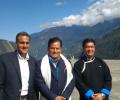
China claims Arunachal Pradesh as part of southern Tibet and routinely protests visits by Indian leaders, foreign officials as well as the Dalai Lama to the area.

Less than a month after the historic visit of Prime Minister Narendra Modi to the US, a Congressional senatorial Committee has passed a resolution recognising Arunachal Pradesh as an integral part of India.
China has long coveted Arunachal Pradesh, which it calls Southern Tibet. But, as Venkataraghavan Subha Srinivasan explains, in 1947, the present state of Arunachal Pradesh constituted the North East Frontier Tract of Assam. When India adopted its Constitution on 26 January 1950, NEFT became 'a separate politico-administrative entity' although it was constitutionally still a part of Assam. Its administration was brought directly under the President of India with the Governor of Assam acting as his agent. A revealing excerpt from his book The Origin Story of India's States.
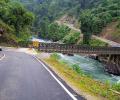
India on Wednesday outright rejected China's attempts to rename some places in Arunachal Pradesh, saying such 'preposterous' attempts will not alter the 'undeniable' reality that the state 'was, is, and will' always remain an integral part of India.

'China continues to perceive its relations with India through the prism of India-US relations, with the US using India to counter balance against China in the Indo-Pacific and beyond.'
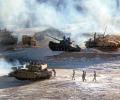
While tensions have eased at several friction points and mechanisms for managing the boundary have been reactivated, underlying differences persist. Disputes over naming practices in Arunachal Pradesh, continued infrastructure development on both sides, and unresolved questions regarding patrolling rights indicate that the structural gap remains, notes Dr Kumar.

In a statement, the BJP MP of Aarunachal East constituency said communities living beyond the McMahon Line share "deep civilisational roots with Bharat", and it's time for India to reclaim the regions "that are rightfully part of our country".
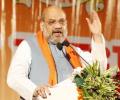
Shah is in Arunachal Pradesh to attend the 34th Statehood Day function and launch a number of projects related to industry and roads, officials said.
China will develop Tibet's picturesque Nyingchi prefecture, located close to Arunachal Pradesh border, into a major tourist hub with an investment of $63.5 million which included construction of 22 "well-off model villages".

The envoy's "Tawang visit highlights resolute US support for Indian sovereignty and commitment to local partnerships", Alice G Wells, Acting Assistant Secretary of State in the Bureau of South and Central Asia, said in a tweet on Wednesday.

"Repeating baseless arguments in this regard does not lend such claims any validity. Arunachal Pradesh was, is and will always be an integral and inalienable part of India. Its people will continue to benefit from our development programmes and infrastructure projects," he said.
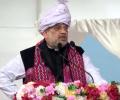
China on Monday criticised Home Minister Amit Shah's visit to Arunachal Pradesh, stating that it violated Chinese sovereignty over the area, a claim outrightly dismissed by India.
India on Tuesday outrightly rejected as 'senseless' China renaming some places in Arunachal Pradesh, and asserted that assigning 'invented' names does not alter the reality that the state 'is, has been, and will always be' an integral part of India.

China on Thursday said it 'firmly opposes' the United States recognition of Arunachal Pradesh as part of Indian territory and affirmed that Washington, DC has nothing to do with the India-China border dispute.

This development comes against the backdrop of Beijing announcing Chinese names for some places in Arunachal Pradesh, which the neighbouring country claims as the southern part of Tibet.
"China's position on the Zangnan region (South Tibet) is consistent and clear. We never recognised the so-called Arunachal Pradesh," Chinese Foreign Ministry spokesperson Hua Chunying told a media briefing while responding to a question.

Zhang made the remarks in response to India's enhancement of its military readiness through the Sela Tunnel in Arunachal Pradesh, according to a report posted on the Chinese defence ministry's website on Friday.
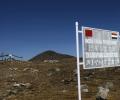
India on Thursday strongly rejected China renaming 15 places in Arunachal Pradesh and asserted that the state has 'always been' and will 'always be' an integral part of India and that assigning 'invented' names does not alter this fact.

The official names of the 11 places were released on Sunday by the ministry, which also gave precise coordinates, including two land areas, two residential areas, five mountain peaks and two rivers and listed the category of places' names and their subordinate administrative districts, state-run Global Times reported on Monday.

Lu said China will take 'further action' to safeguard its sovereignty.
"China's position is consistent and clear about the China-India border issue including the disputed area of Eastern section and the Indian side is aware of it. The position has remained unchanged," the Chinese foreign ministry spokesman's office said in Beijing on Monday.

The invitation to the "Dalai Lama for activity in the disputed areas between China and India will only damage peace stability of the border areas as well as the bilateral relationship between China and India", Chinese foreign ministry spokesman Lu Kang.

China has maintained a studied silence over Dalai Lama's ongoing visit to Arunachal Pradesh, but a state-run newspaper on Monday said he made the trip under pressure from India.
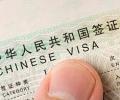
India on Thursday described as "unacceptable" China issuing stapled visas to some sportspersons from Arunachal Pradesh and asserted that it reserves the right to "suitably respond" to such actions.
The United States has recognised that territory (Arunachal Pradesh) for a long time (as an integral part of India), White House Press Secretary Karine Jean-Pierre said.
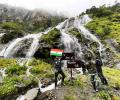
A participant holds the Tiranga during Tawang's first-ever motorcycle expedition from Holy Tree to the Holy Waterfalls organised by the Indian Army in Tawang, August 23, 2022.
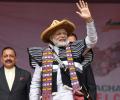
New Delhi's reaction came in response to Beijing announcing Chinese names for 11 more places in Arunachal Pradesh which the neighbouring country claims as southern part Tibet.
China's Ministry of Civil Affairs on Sunday released standardised names of 11 places for Arunachal Pradesh, which it calls "Zangnan, the southern part of Tibet".

The ministry of external affairs said India has conveyed its "consistent position" on the issue to China on several occasions.

How does blatantly claiming Indian territory help to maintain 'peace in border regions', is a mystery that only China can explain, notes Claude Arpi.

The 17th Gyalwang Karmapa Ogyen Trinley Dorje last week visited Arunachal Pradesh, which China claims as a part of southern Tibet.

China said it was committed to peace and tranquility at the border areas.

China has welcomed Modi remarks on border, and has said it has a 'positive attitude'.
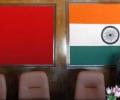
India on Friday strongly protested China's decision to issue invalid visas to some of its athletes for the Asian Games.

The Dalai Lama's Arunachal visit is not likely to derail the relationship but it is enough to signal the Chinese that India is also willing to flash the Tibet/Taiwan card should the need arise, says Sana Hashmi.
The five youths had gone missing on Friday from the Sino-Indian border in the Upper Subansiri district of Arunachal Pradesh.
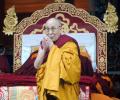
The papers said India is using the Dalai Lama as a "diplomatic tool" against China for its "vice like veto" against India's membership in the Nuclear Suppliers Group and United Nations ban on Jaish-e-Mohammed chief Masood Azhar.
